
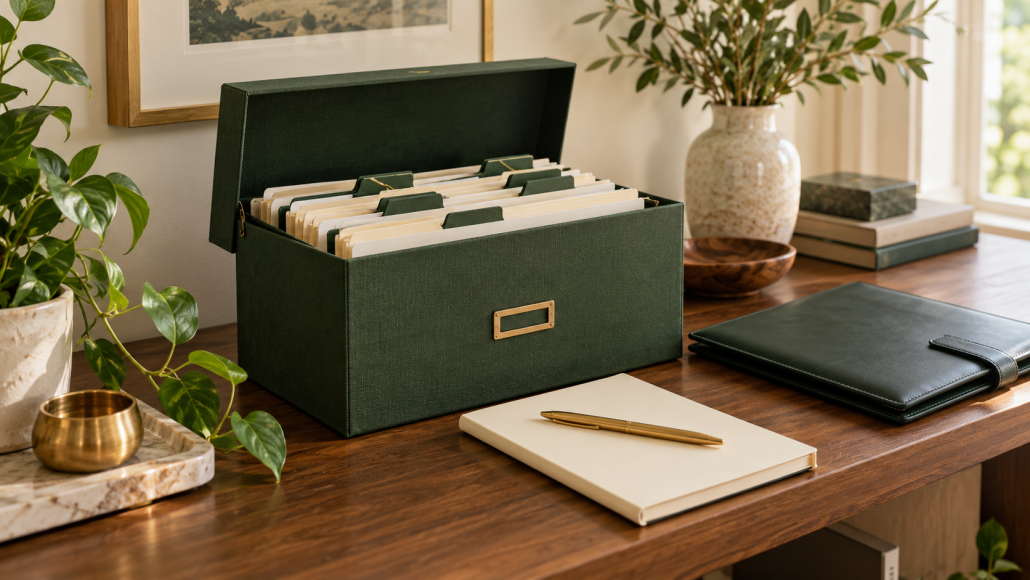
Create a Secure Document Guide Your Family Can Use
By Jerry Torres | Wealth Crafters, Inc.
Would someone you trust know where to look for your important documents? You may know exactly where you keep an insurance policy or estate planning folder, but that knowledge may not be obvious to anyone else.
A secure document guide can help. It is a short list of the records you have, where you keep them, and whom to contact with questions. Start with one document today. You can make the guide more useful over time without turning it into a collection of sensitive personal information.
Make a guide to locations rather than a second set of records
The goal is to help the right person find the right record when needed. You do not have to copy every document into the guide or list everything you own.
Begin with information that answers four questions:
- What is the document or record?
- Where is the current version stored?
- Who is the relevant contact?
- When did you last check this entry?
For example, an entry could say: “Home insurance policy; insurance folder in the locked home file cabinet; contact the insurer using the number on the policy; checked October 2026.” This is an illustration, not a recommendation for a particular storage location. Use descriptions that someone you trust can understand without guessing.
Add the records that matter to your household
Start with the documents you already have. Useful categories may include insurance policies, bank and retirement account records, property records, and existing estate planning documents.
For a will, trust, or other planning document, note its title and location. If you have both an original and a copy, distinguish them in the guide. Do not assume an older copy is the current one. If you cannot tell which version is current, mark the entry for review rather than guessing.
The National Institute on Aging recommends organizing important papers and telling a trusted person where to find them. Its broader planning checklist can help you think about categories to review. For this simple guide, record locations and contacts rather than copying the sensitive details contained in the underlying records. See the National Institute on Aging checklist.
Keep sensitive information off the guide
Leave out passwords, PINs, Social Security numbers, and full account or payment card numbers. A bank name and a general record description may be enough to point someone toward the appropriate file. Do not attach statements or identity documents merely to make the guide feel complete.
Treat the guide itself as private. Even without account numbers, it may reveal where valuable records are kept or which institutions you use. Avoid putting it in a family group chat or a shared folder with broad access.
The Federal Trade Commission recommends keeping financial records and documents containing personal information in a safe place. Apply that same care to the records your guide points to. Read the FTC’s identity theft prevention guidance.
Give one trusted person a clear starting point
Choose someone you trust and explain what the guide is for. Tell them where it is stored and when you would want them to look for it. You can explain the system without handing over every underlying document.
Knowing where a record is does not, by itself, authorize someone to manage an account or make decisions for you. Keep that distinction clear. Where access or permission is uncertain, ask the relevant institution about its requirements rather than assuming the guide settles it. The National Institute on Aging notes that sharing information with a caregiver may require separate permission or forms. Review its guidance on permissions.
Walk through one entry together. Does the description make sense? Can the person identify the right folder without seeing unnecessary private information? A brief check can reveal unclear labels before the guide is needed.
Keep it current with small updates
Add a “last reviewed” date. Revisit the guide when you move a file, change an insurer, or update a planning document. If you keep a backup copy, update it too so two conflicting versions do not circulate.
Keep a separate list of unresolved questions. You might need to locate an original document or confirm a contact number. That list lets you improve the guide gradually without presenting uncertain information as settled.
For today’s first step, choose one important record, write its location, and identify the appropriate contact. Store the guide securely and let one trusted person know where to begin.
Watch Jerry Torres’s video on helping your family know where to look.
For an informational consultation, schedule with Wealth Crafters or call 909-259-8242, Ext. 101.
General information, not legal advice.


Leave a Reply
Want to join the discussion?Feel free to contribute!